PE WPC decking is the line we quote when a deck needs a timber look without the ASA price. Every board in it is capped: a wood-flour and HDPE core with a polymer shell co-extruded around all four faces in a single pass, so the shell is continuous around the profile and there is no coating to peel, no seam to lift and no bare edge for water to wick into. That shell — not a film, not a paint — is where the wear resistance and the weather resistance come from.
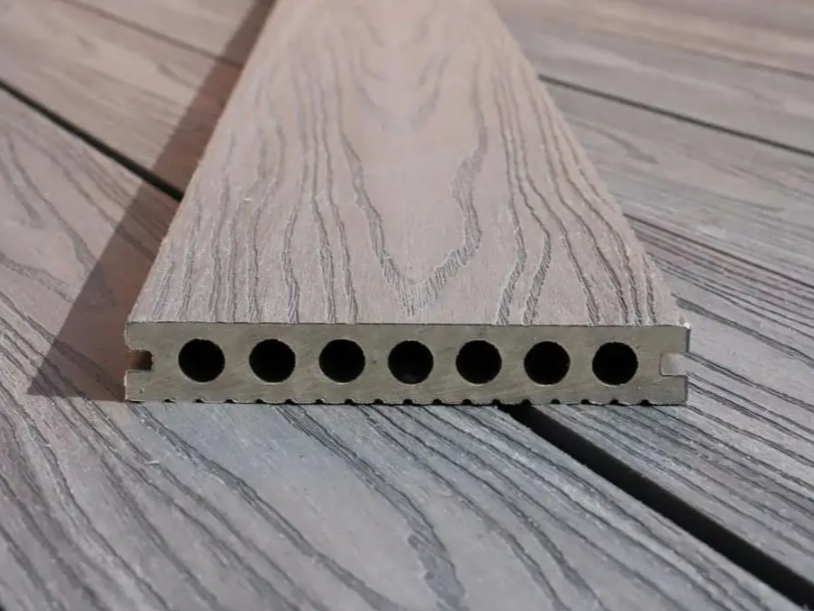
We do not manufacture a bare-core board. That is a commercial choice, not a claim that bare boards do not exist: plenty of them are sold, most of them cheaper, and you will be quoted them if you shop around. The section below sets out what a bare board does and does not do, so the price gap makes sense before you compare it with ours.
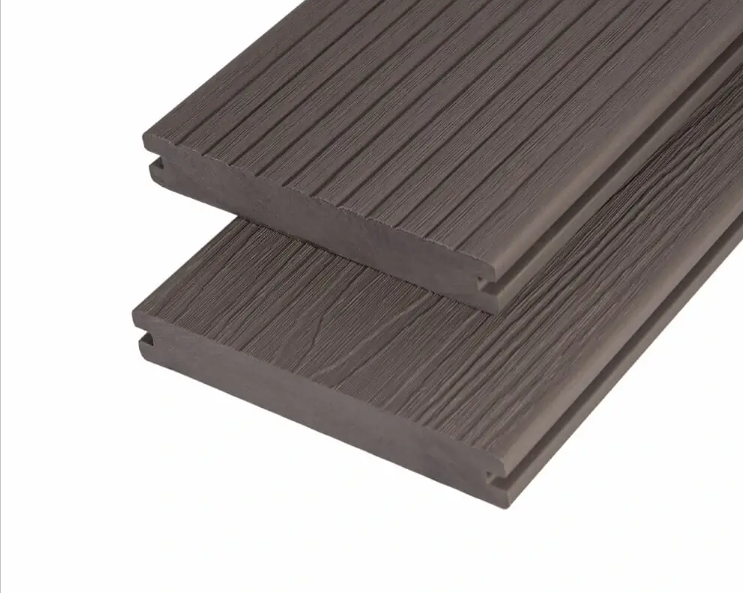
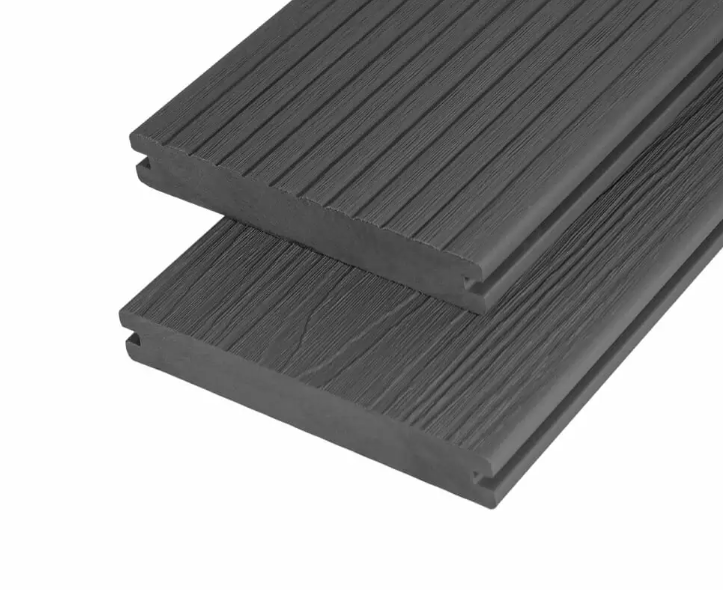
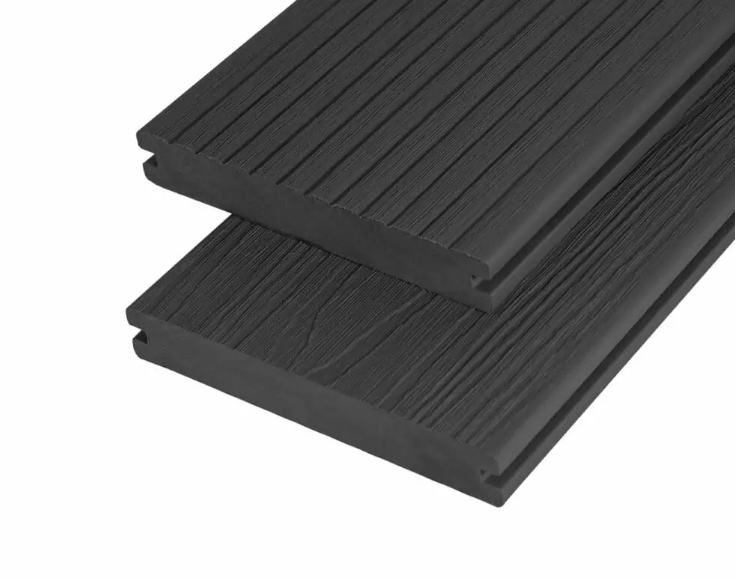
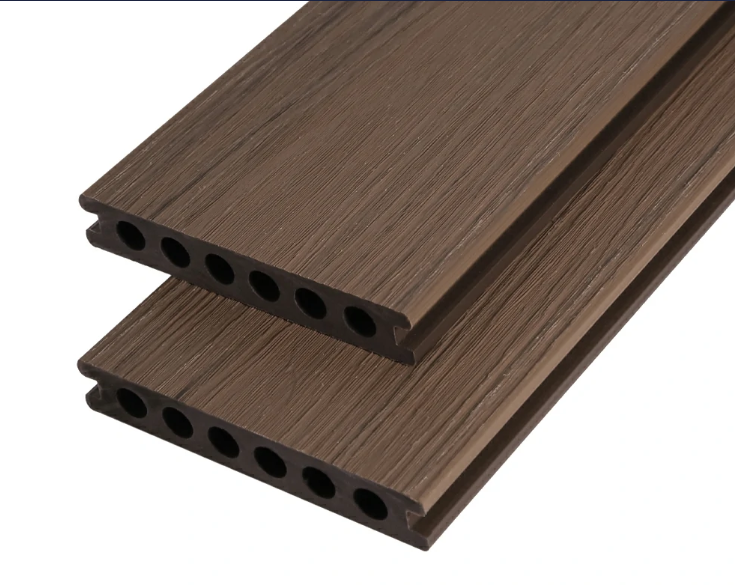
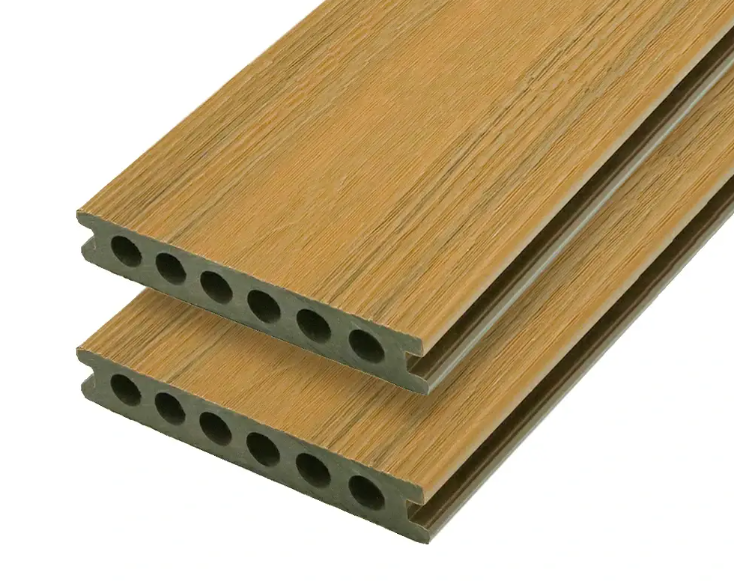
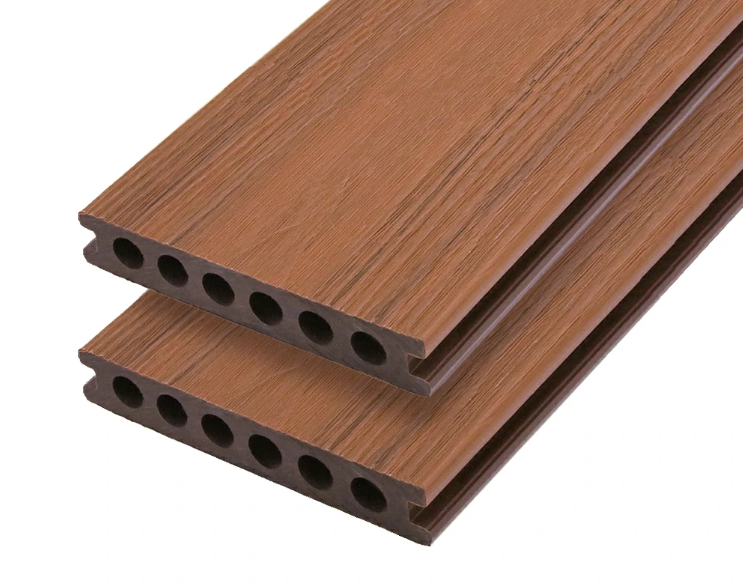
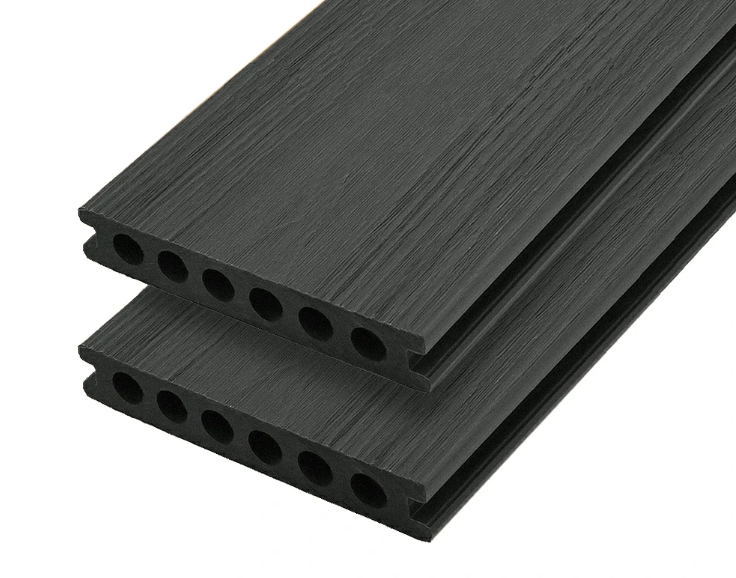
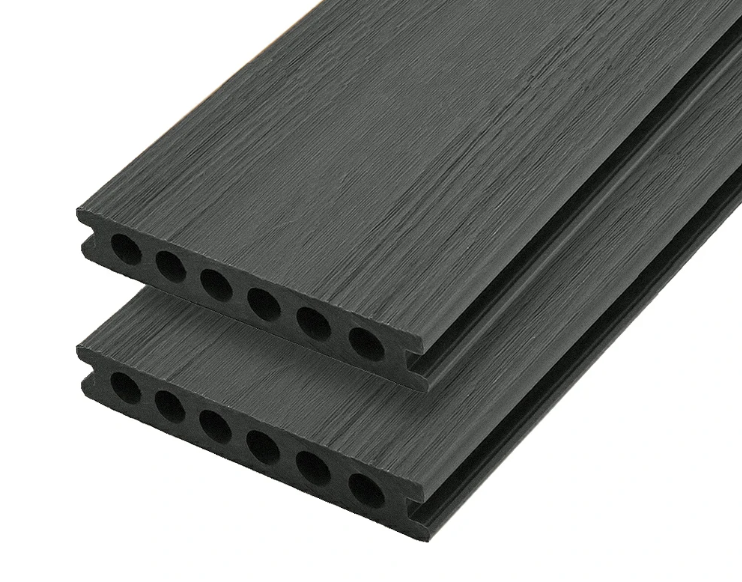
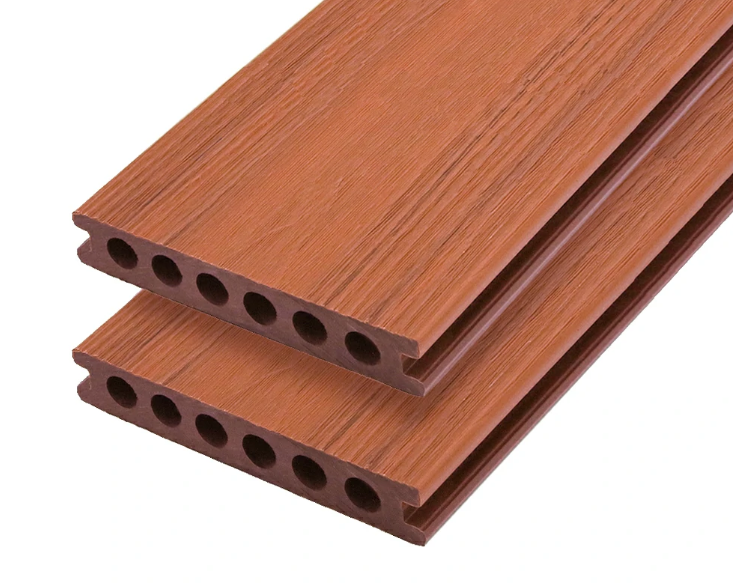
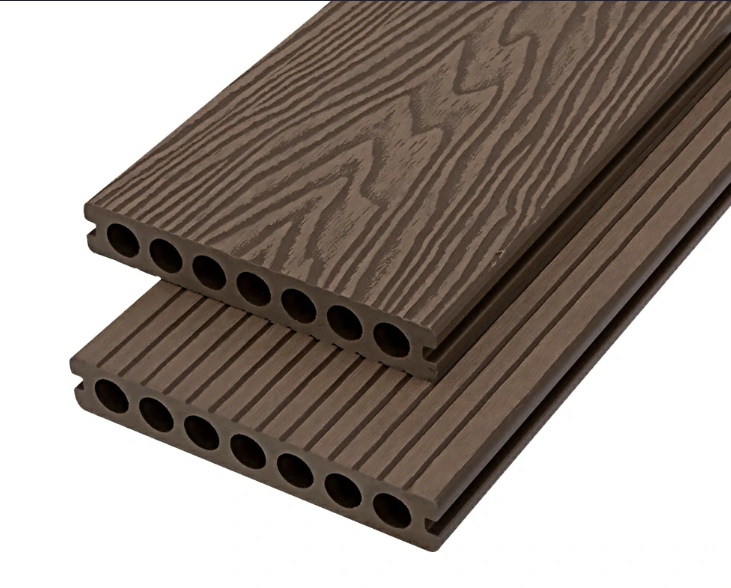
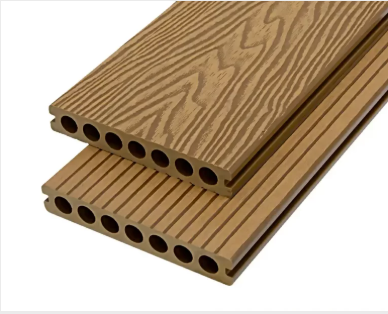
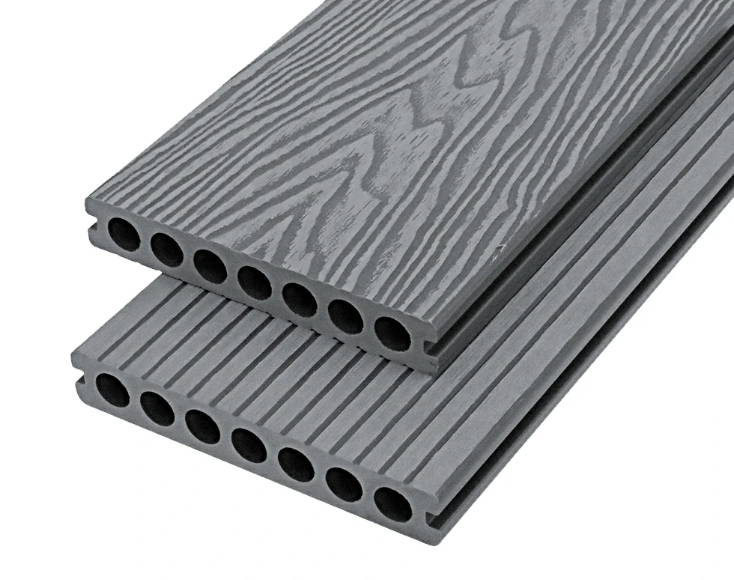
Sections and lengths
Seven profile sections, one long board, all from the same PE-capped compound.
| Profile (mm) | Length (m) | Typical use |
| 144 × 22 | 2.4 / 2.9 / 3.6 / 4 or custom | Standard residential deck |
| 146 × 24 | 2.4 / 2.9 / 3.6 / 4 or custom | Heavier domestic traffic |
| 150 × 25 | 2.4 / 2.9 / 3.6 / 4 or custom | Commercial and hospitality |
| 140 × 24 | 2.4 / 2.9 / 3.6 / 4 or custom | Renovation, matched to older decks |
| 145 × 22 | 2.4 / 2.9 / 3.6 / 4 or custom | Slim residential board |
| 114 × 19 | 2.4 / 2.9 / 3.6 / 4 or custom | Balcony, cladding, fascia |
| 140 × 23 | 2.4 / 2.9 / 3.6 / 4 or custom | General purpose |
| 142 × 10 (long board) | See the long board section below | Long runs and fascias |
All eight profiles are capped. Joist centres, expansion gaps and fixing pattern for each section are on the installation page.
The long board: 142 × 10 mm, cut to order
Every other profile on this page comes in stock lengths — 2.4, 2.9, 3.6 and 4 m. This one does not. It is a 142 × 10 mm capped board run to the length on your order, so a face that would otherwise be three boards becomes one.
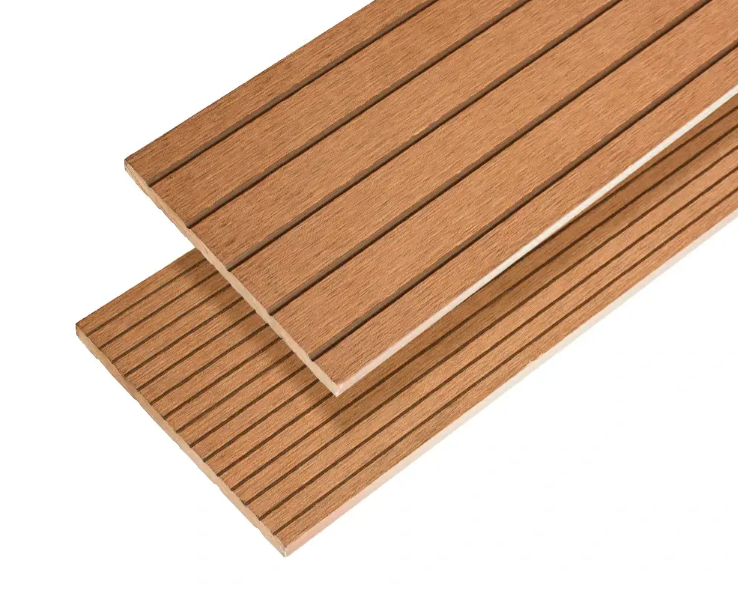
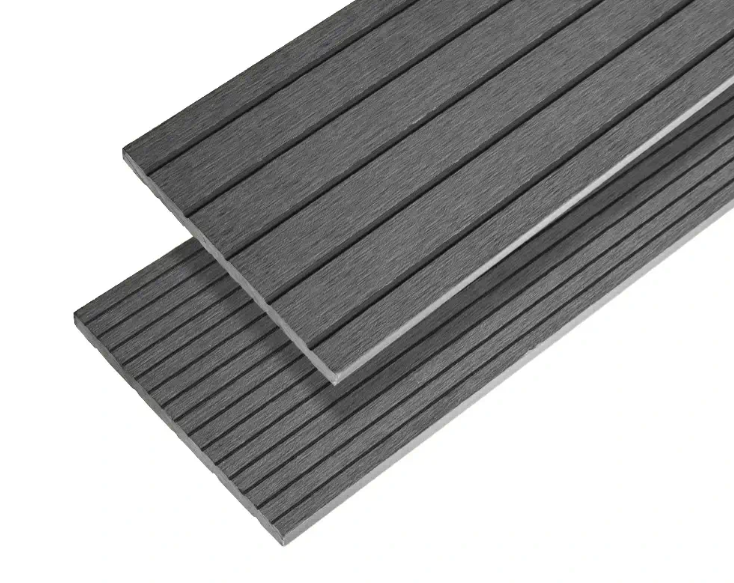
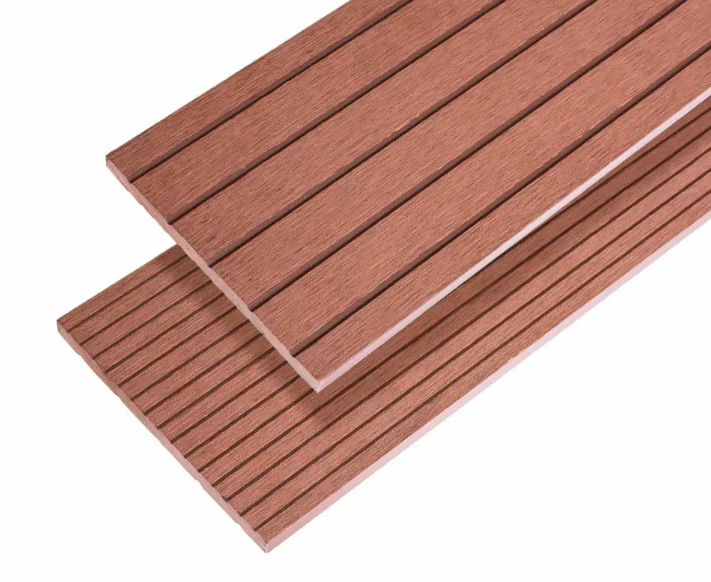
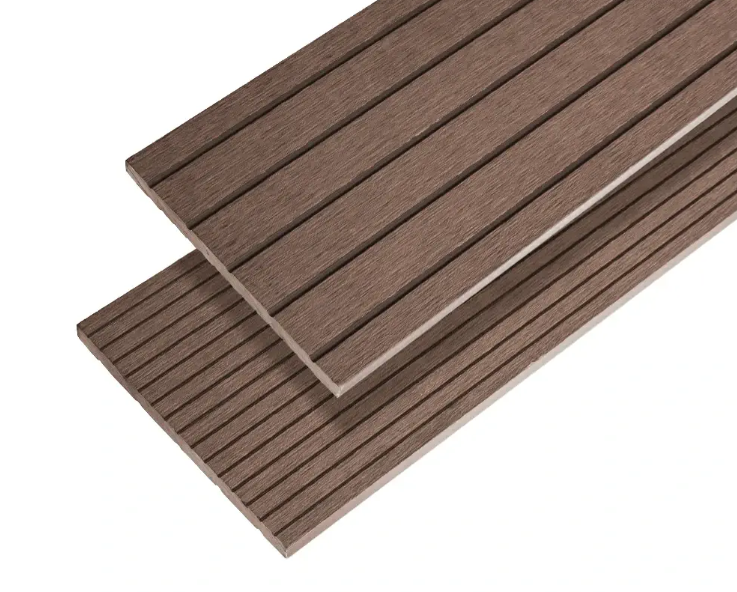
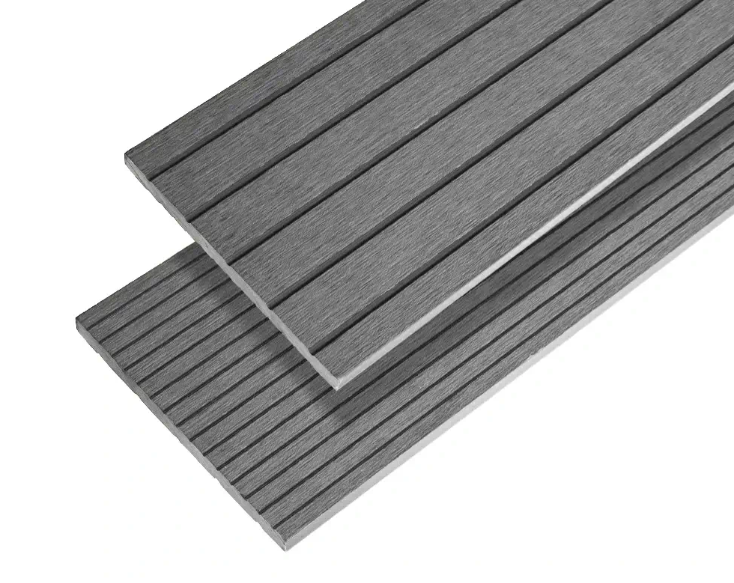
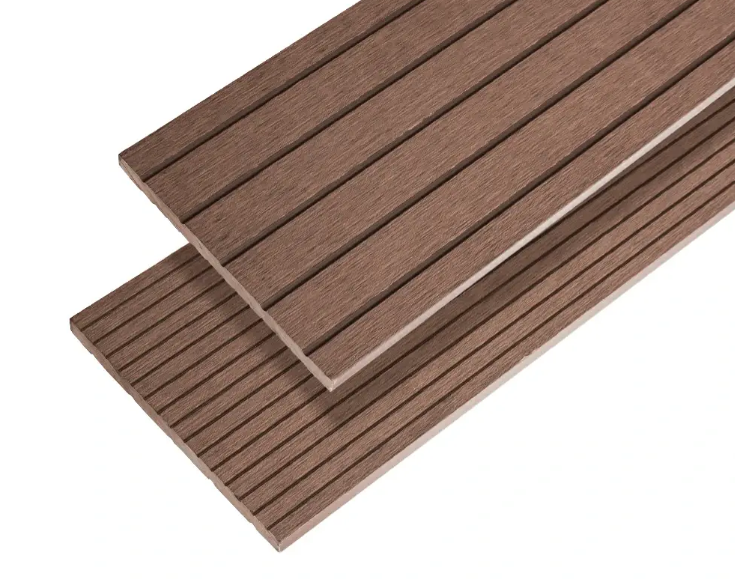
The reason that matters is joints. A butt joint is where a deck starts to look tired: the two boards move at different rates through the seasons, grit and water collect in the gap, both cut ends need sealing, and a joint that lands badly leaves a step you feel through a shoe. Take the joints out and those problems go with them — on a long elevation it is the first thing you notice from the far end of the deck.
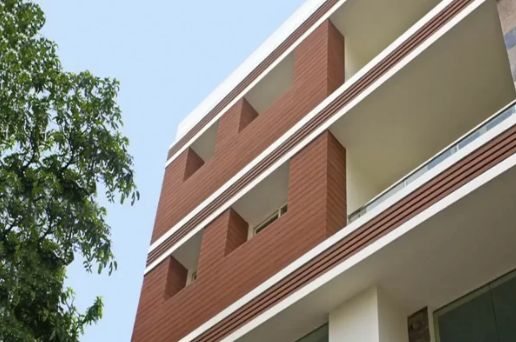
Where it earns its place
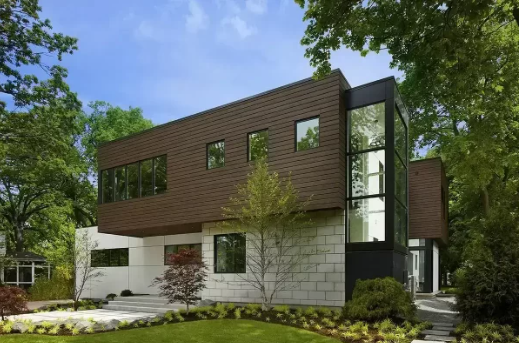
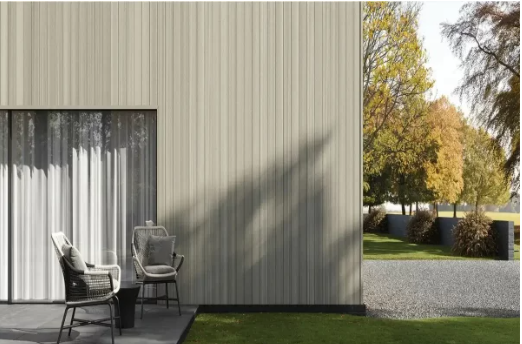
- Fascia and edge trim on a long elevation, where a join mid-run is the one thing the eye finds.
- A closing board on a terrace that has to carry the same colour round a corner without a visible seam.
- Long runs where the design will not accept a break — roof terraces, balconies and raised decks that read as one plane.
How the length is set
- Send metres, not board counts. Give us the run lengths and we come back with a cut list and a packing plan, because a 4 m run and a 7 m run pack differently.
- The ceiling is transport, not the line. Length is limited by what will travel in a container or on a flatbed; a board cut past that limit arrives as two boards and a joint you did not want.
- Ends are sealed before packing. Every cut you make on site still needs sealing before the board goes down — same rule as any capped board.
What the 360° shell does that a bare board cannot
“360°” is not marketing shorthand. The shell is extruded around the wood-flour core so that it covers all four faces of the profile in one continuous pass — face, two edges, underside. There is no starting point and no finishing point, which means no overlapping seam and no edge where a film would have to be terminated.
A bare board is the opposite construction: the wood-flour and HDPE mix is the surface. Nothing sits between the weather and the wood fibre.
That single difference decides everything that follows.
| Capped PE board | Bare (uncapped) WPC board | Bare (uncapped) WPC board |
| Surface | Polymer shell on all four faces | Wood-flour mix exposed |
| Water | Shell keeps water off the core; only a cut end can take it up | Surface wets through on every rain, core takes water from the face |
| Freeze–thaw | Core stays dry, so no swelling cycle at the face | Face swells and lifts where water froze inside it |
| Sun and colour | Pigment is in the shell, so colour holds as the surface wears | Grains and greys as the wood fibre at the surface breaks down |
| Mould and algae | Nothing organic at the surface for it to feed on | Wood fibre at the surface feeds it, especially in shade |
| Foot traffic and grit | Shell takes the abrasion | Face scuffs, furs and shows pale marks |
| Cut ends | Sealed or trimmed; the shell is what water meets | Core exposed at every cut, wicking from each one |
| Cleaning | Pressure wash, no re-oiling | Scrubbing raises fibre; aggressive cleaning makes it worse |
| Price per m² | Higher | Lower |
Where a bare board still makes sense. A covered porch that never sees standing water, a rental where the deck is expected to last one tenancy, a budget where the difference pays for the railing. If the deck is shaded, dry and short-lived, a bare board is a rational buy and we will not pretend otherwise.
Where it does not. Any deck that takes rain on an exposed face, any deck that freezes, any deck where the surface will be walked on in grit, and any project where someone has to come back in three years to replace boards. Those are the conditions that turn the price saving into a callback.
Why we only quote capped. The failure mode of a bare board is not a dramatic one — it greys, it furs, it takes water at the cut edges, and the surface goes from a colour to a weathered grey-brown over a few seasons. Nobody files a warranty claim on that, which is exactly why it is a bad product to put on a deck you are also selling the installation for.
Colours
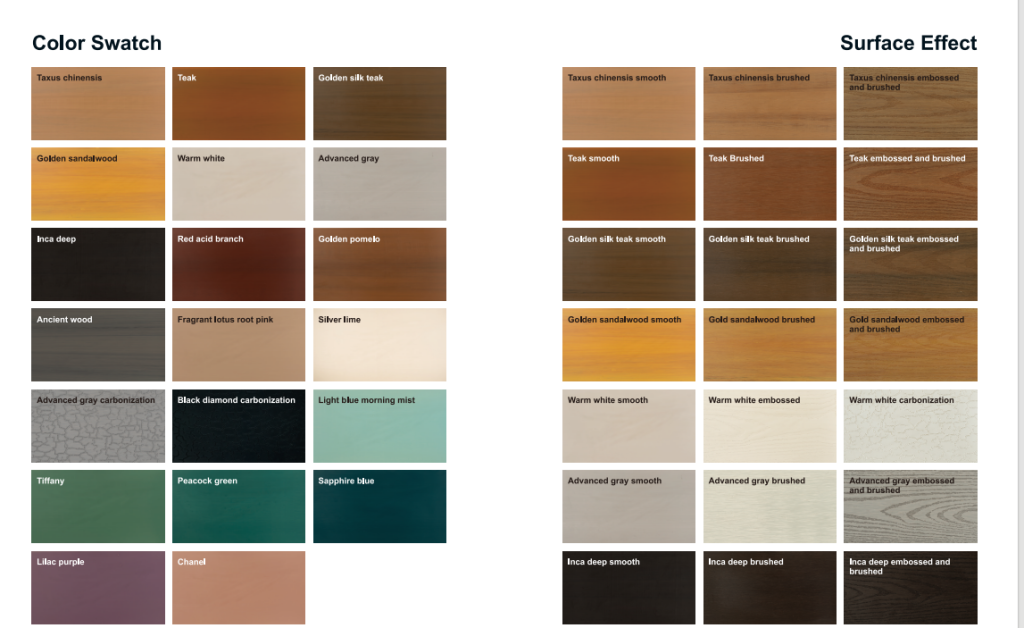
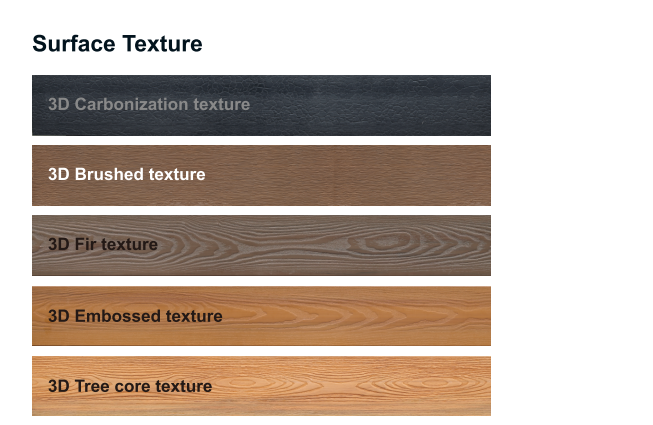
Twenty colours on this line, from eleven base pigments. The shell carries the colour, so the board does not need re-staining and a scuff does not expose a different layer underneath. Standard finish on all twenty; ask for the colour card and we will send the physical chips rather than a screen reference, because a monitor will not tell you what a deck looks like in shade.
Ordering
- First order from 300 m² per design & color, mixing up to three colours or three sections in one container.
- Samples free, freight collect — the freight is credited back against the order.
- Lengths in 2.4, 2.9, 3.6 and 4 m off the line; custom cut on request.
- Lead time and packing quoted per section, because a container of 150 × 25 and a container of 114 × 19 do not load the same.
FAQs
Is a capped board the same as a co-extruded board?
Yes — capping is done by co-extrusion. The shell and the core leave the die together, which is what makes the shell continuous rather than applied. If a supplier says "capped" but cannot say "co-extruded", ask which one they mean.
What actually goes wrong with an uncapped board?
The wood fibre is the walking surface. It takes water at the face and at every cut end, it greys in UV, and it supports mould in shade. None of that is a sudden failure — it is a slow loss of appearance over a few seasons and, at the cut edges, a slow loss of the core.
Can I get a bare board from you?
No. We only run the capped PE line and the ASA line, so we are not the cheapest quote you will get on a bare-core deck. If a bare board is what the budget allows, buy it from someone who makes it properly rather than from us at a capped price.
Which section should I use?
Send the span, the joist centres and whether it is residential or commercial, and we will come back with the section, the fixing pattern and the colour options in one reply.
Do you cut boards to length?
Yes, for the 142 × 10 mm long board — give us the run lengths and it is cut to that measurement. The seven standard profiles come in 2.4, 2.9, 3.6 and 4 m off the line; custom lengths on those are quoted per order, because the packing changes with the length.