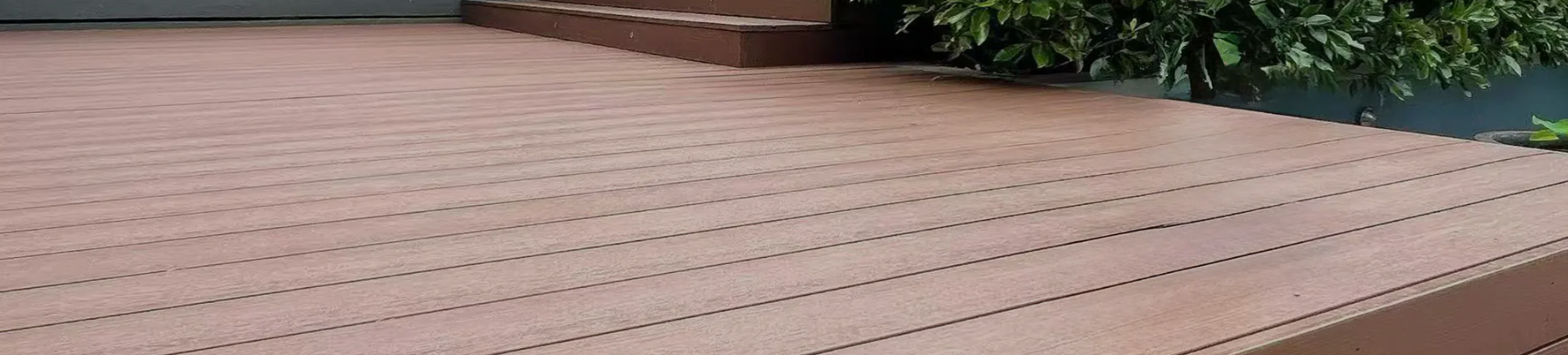
Standard ASA Capped WPC Decking: Profiles, Colours and 3D Textures
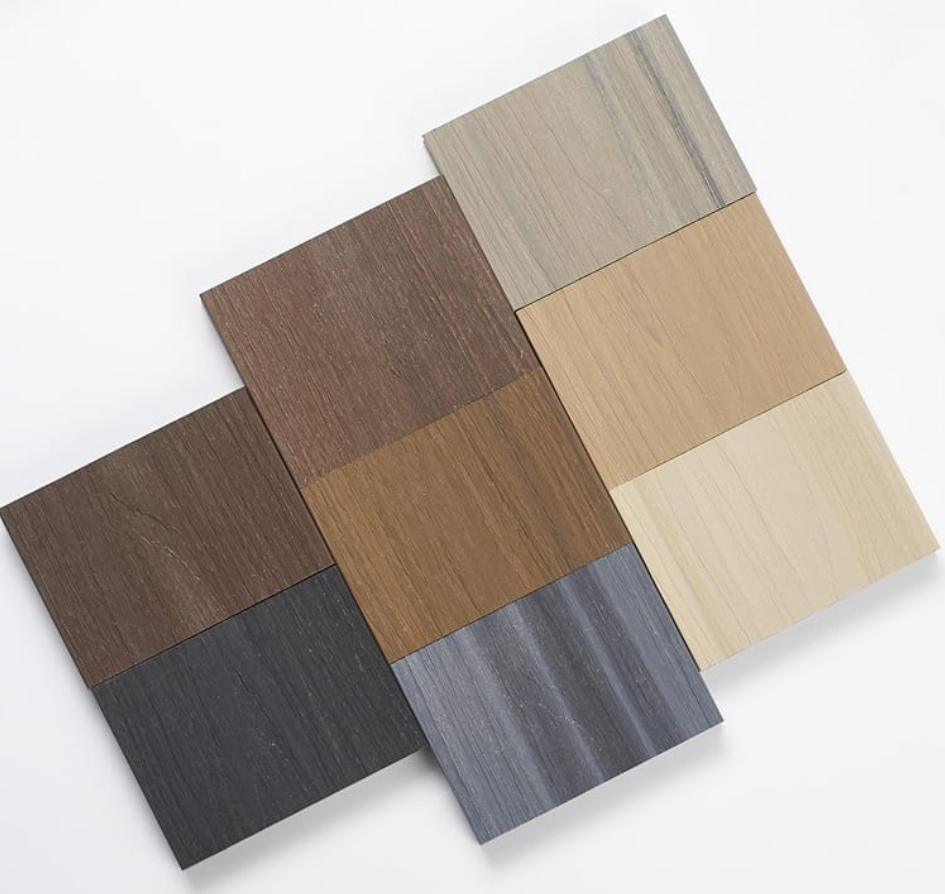
Standard ASA capped decking is the line we quote when a project needs a co-extruded board wide enough in colour range to follow a design, at a price below our premium series. It is a three-layer board: a WPC core, a 360° ASA cap, and a roller-embossed surface register. Twenty colours, five 3D textures and four surface treatments run across five sections, so most residential and light commercial specifications can be met from one line without a custom run.
This page is about the standard line specifically — the sections, the colours, the textures, what the cap does and does not do, and the test results behind it. If you are still deciding whether a capped board is the right choice at all, the premium series page covers the thicker-cap, reinforced-core version, and our composite decking guides index the rest.
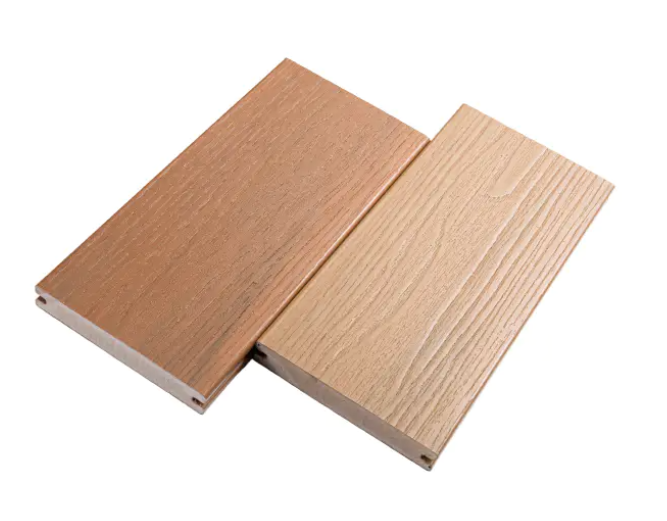
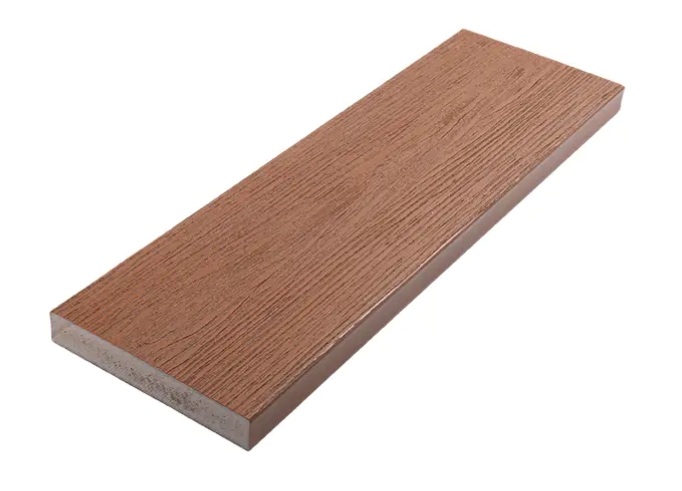
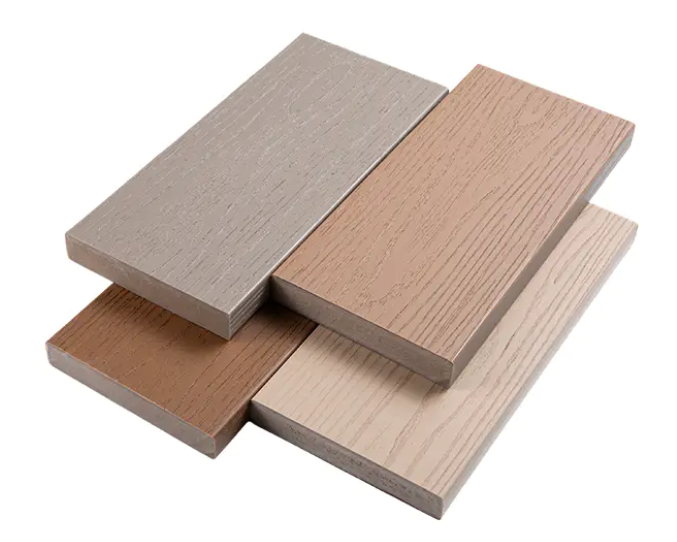
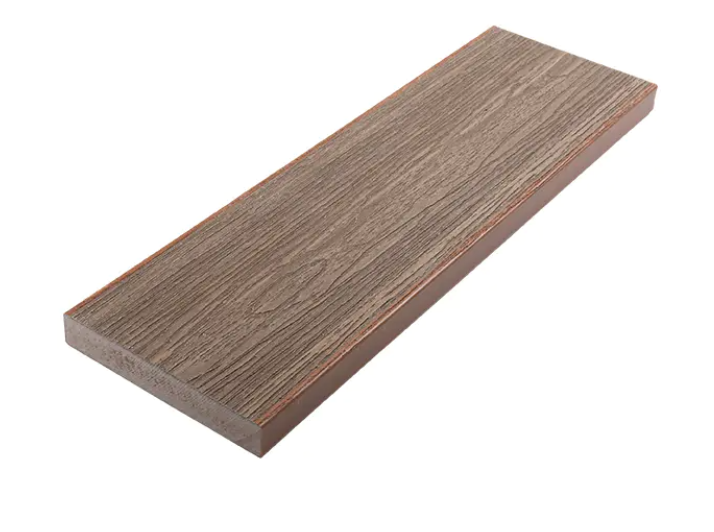
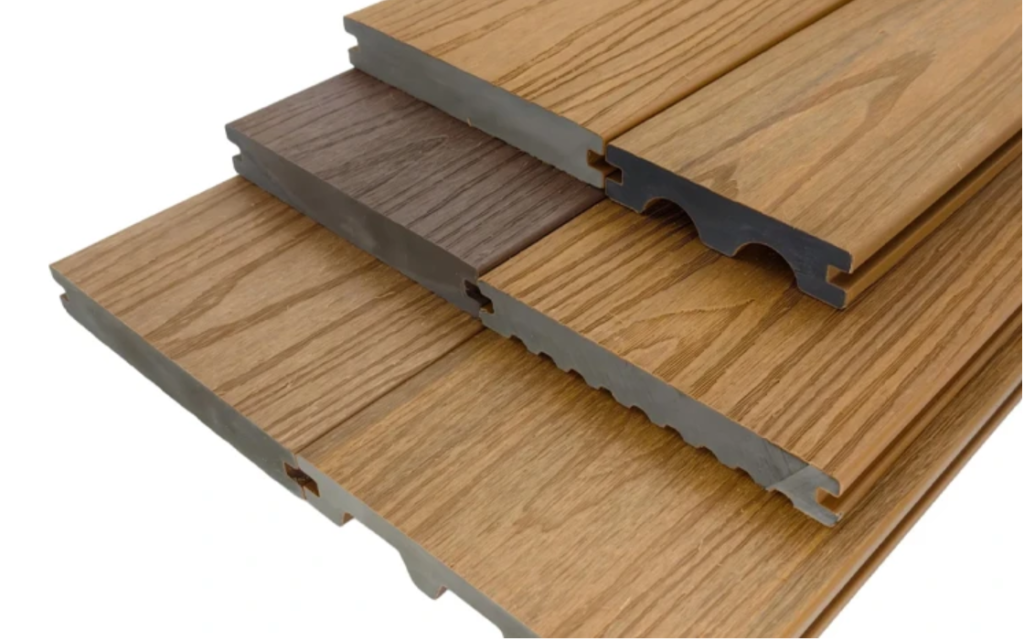
Five sections in the standard line
All five profiles run in the same twenty colours and the same texture range. Length is 2.9 m, or to order.
| Dimensions (W × T, mm) | Length |
| 80 × 24 | 2.9 m, or to order |
| 138 × 23 | 2.9 m, or to order |
| 140 × 23 | 2.9 m, or to order |
| 140 × 24 | 2.9 m, or to order |
| 145 × 25 | 2.9 m, or to order |
Twenty colours, grouped by treatment
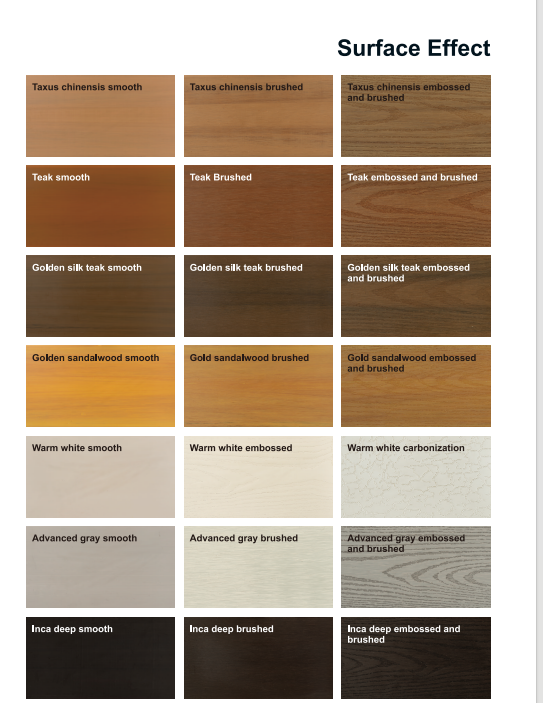
The colour range is not flat. Seven colours are made in more than one surface treatment, two are carbonised, and eleven are supplied in the standard finish.
Made in multiple treatments (7)
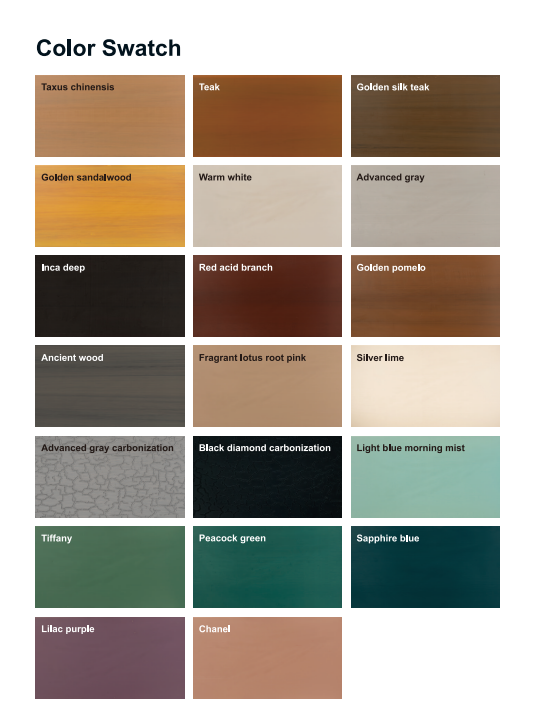
| Colour | Treatments available |
| Taxus chinensis | smooth / brushed / embossed and brushed |
| Teak | smooth / brushed / embossed and brushed |
| Golden silk teak | smooth / brushed / embossed and brushed |
| Golden sandalwood | smooth / brushed / embossed and brushed |
| Advanced gray | smooth / brushed / embossed and brushed |
| Inca deep | smooth / brushed / embossed and brushed |
| Warm white | smooth / embossed / carbonization |
Carbonised (2)
| Colour |
|---|
| Advanced gray carbonization |
| Black diamond carbonization |
Standard finish (11)
| Colour | Colour | Colour |
|---|---|---|
| Red acid branch | Golden pomelo | Ancient wood |
| Fragrant lotus root pink | Silver lime | Light blue morning mist |
| Tiffany | Peacock green | Sapphire blue |
| Lilac purple | Chanel | — |
Colour names are internal references, not colour codes. Physical swatches are the reference — order a sample board before specifying a match against paint, masonry or cladding.
Four surface treatments
Treatment is how the board is finished. Texture is a separate decision, covered in the next section.
- Smooth — the cap is left flat. The most slip-relevant option in shade or near water, and the easiest to clean.
- Brushed — the cap is mechanically brushed to open a fine grain. Reads closer to timber underfoot, holds a little more dirt in the grooves.
- Embossed and brushed — a registered grain is embossed, then brushed. The deepest-looking of the four; most of the wood-effect range is specified this way.
- Carbonization — a two-tone treatment where the raised grain is darkened against the base. The most timber-like and the least uniform from board to board by design; the variation is the point, so order the whole deck in one batch.
Five 3D textures
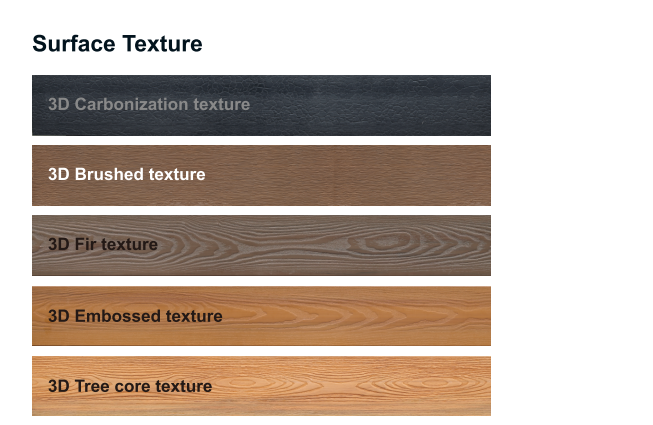
Texture refers to the emboss register — the pattern cut into the roller that forms the grain. Five are available across the standard line:
3D Embossed · 3D Brushed · 3D Fir · 3D Carbonization · 3D Tree core
These pair with the treatments above. Smooth and brushed are themselves flat or lightly brushed surfaces, so a 3D register is normally specified with embossed and brushed or carbonization. If a colour and a texture you want are not a standard pairing, ask — the register set is broader than the printed card shows, and some combinations are run to order.
What “co-extruded” means on this board
Three layers, formed in one pass:
- Core — wood flour, HDPE and process additives, extruded to the section.
- Cap — ASA, bonded to the core during extrusion and running around the full perimeter, not applied as a film or a laminate afterwards.
- Register — the surface texture, rolled in while the cap is still setting.
Because the cap is co-extruded rather than glued, there is no bond line to lift at an edge. The cap on the standard line is specified in the 0.05–0.06 mm range on the face; thinner caps common in the market run 0.03–0.04 mm. Cap thickness is confirmed per profile on the quotation — ask for the figure on the section you are pricing rather than taking a headline number.
The cap protects the face and the edges from UV and moisture. It does not seal a cut. Every board cut on site, and every end, needs the cut edge treated with the matching end sealer or capped with the system trim. That is the one maintenance action that decides how a capped deck looks in year five.
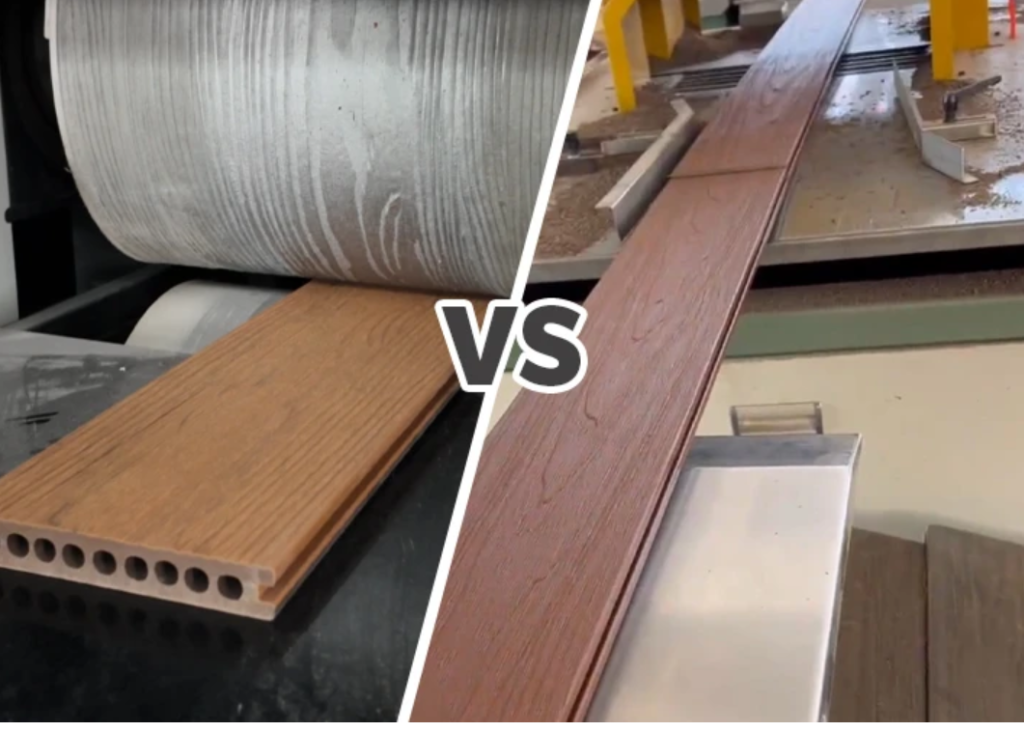
ASA versus PE capping
Both are co-extruded caps. The difference is the polymer, and it changes what the deck is good for.
| ASA cap | PE cap | |
|---|---|---|
| UV and colour retention | The reason ASA is specified — designed for long sun exposure | Workable; colour moves sooner under constant sun |
| Surface | Harder, takes a deeper emboss register | Softer, shallower register |
| Cost position | Higher material cost | Lower — the budget option |
| Best fit | Full-sun decks, commercial, projects with a colour commitment | Shaded sites, low-traffic decks, cost-driven specifications |
We do not sell PE-capped boards as a compromise and we do not claim ASA makes a board indestructible. PE capping is the right answer on a shaded residential deck on a tight budget. ASA is worth the difference when the deck faces the sun, when the client has signed off a colour, or when repainting or replacing boards is not an option later.
What the weathering curve actually shows. ΔE 0.96 at 3,000 hours is a shift most people would not pick out by eye. The rate is not linear: it holds at 0.64 through 1,500 and 2,000 hours, reaches 0.96 at 3,000, then climbs — 1.87 at 3,500 hours and 4.58 at 4,000. Lightness moved from L 33.00 to 37.71 over the same exposure, which is why a long-weathered dark board reads lighter rather than greyer. Plan on a capped deck holding colour for many seasons, not forever, and expect dark colours to move first. One more limit: the sample was a single brown/beige board. Values on a charcoal or a blue are not the same, and we do not quote the ΔE figure as a guarantee across the range.
Where this line fits
Specify standard ASA capped for:
- Full-sun residential decks where the owner has chosen a colour from the card and expects it to stay close.
- Light commercial and hospitality — terraces, pool surrounds, walkways — where a slip-relevant surface and a cleanable finish matter.
- Projects that cannot revisit the deck for three to five years and need the colour decision to hold.
- Mixed-package orders where several finishes come off one line, so a whole scheme can be built without splitting into multiple production runs.
Move up to the premium series when the deck is a feature, the cap needs to be thicker, or the span and loading call for a reinforced core. Move down to an uncapped board when the site is shaded, traffic is light, and the budget is the deciding factor — an uncapped board that can be sanded back is sometimes the more honest choice.
Ordering terms
- Low minimum for a first order. We can take a first order below 300 m², which most factories cannot. It is the cheapest way to test the material and the paperwork before committing to a full container.
- Mixed colours and sections in one load. Three colours, or three specifications, can be combined in a single order — useful when a scheme uses two decking colours plus a border profile.
- Free samples. You pay the freight, we credit it back against the order. Colours are matched on physical swatches, not on screen.
- Length 2.9 m as standard, or cut to order.
- Lead time and shipping terms are confirmed with the quotation, against the sections, colours and quantity on the enquiry.
- Documents — SGS reports, REACH and RoHS declarations, and the formaldehyde result are supplied with the quote.
To price a project, send the sections, colour references, total area and destination port. We return a quotation with the cap thickness for each profile stated explicitly.
Fixing and installation
The standard line uses the hidden clip system on the grooved profiles and stainless screws on the solid-edge boards, with the same expansion allowance at every end and abutment — the board’s linear expansion is 3.195 × 10⁻⁵ / °C, which is what sets that allowance. Joist spacing, gap sizing, clip layout, cutting and edge sealing are all covered in the installation guide. Cut ends must be sealed before the board goes down, not afterwards.
FAQs
Is capped composite decking the same as WPC decking?
A capped board is a WPC board with a co-extruded polymer shell. The core is wood flour and HDPE either way; the cap is what changes the UV and moisture behaviour of the surface. “WPC decking” describes the core, “capped” describes the finish over it.
Does capping mean the board will never fade?
No. Capping slows colour change; it does not stop it. On our tested section ΔE was 0.96 at 3,000 hours of accelerated weathering, rising to 4.58 by 4,000. Dark colours move more than light ones. What capping does buy is years of service before the change is visible from standing height.
Can a capped board be sanded or refinished?
No. The cap is a fraction of a millimetre thick — sanding through it exposes the core and leaves a patch that will weather differently from the rest of the board. If refinishing a worn deck matters to you, an uncapped board is the correct specification, and we will say so rather than sell you a cap you cannot work.
ASA or PE capping — which should I order?
ASA if the deck faces the sun, the colour has been signed off, or nobody will be back to maintain it. PE if the site is shaded, traffic is light, and the budget is the constraint. Both are co-extruded; the difference is how long the surface holds its colour.
Need a price on a specific section and colour?
Send the sections, colours, total area and destination port, and we will quote with the cap thickness stated per profile. First orders under 300 m² accepted, samples free (freight credited against the order).